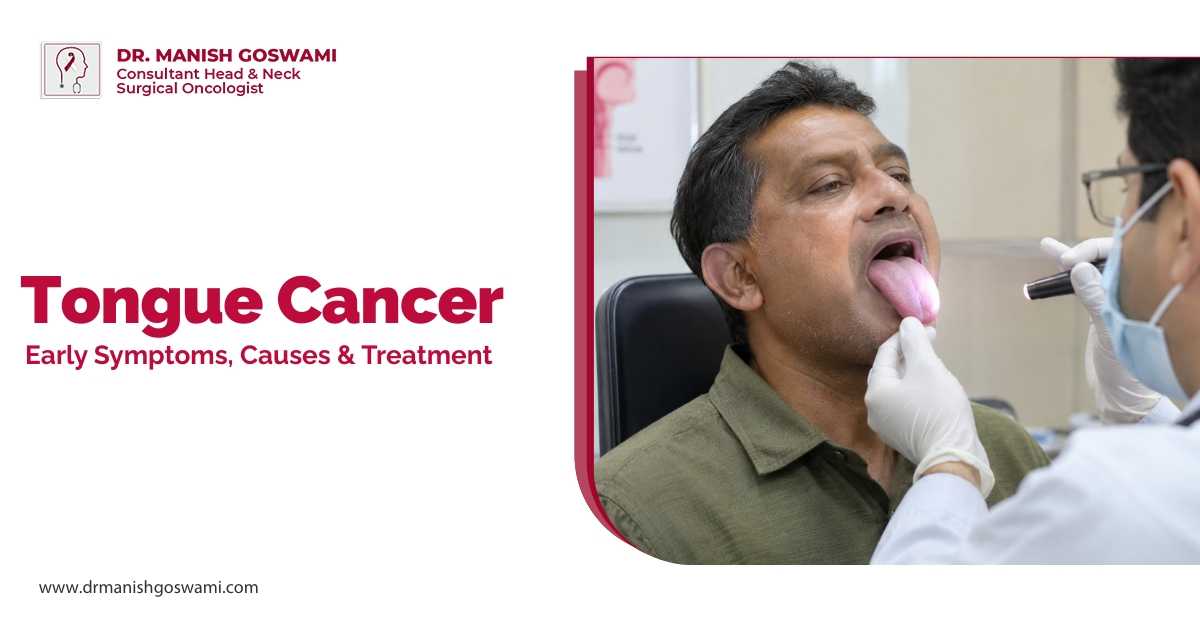






Small tongue ulcers, persistent patches, or discomfort after swallowing could appear to be minor concerns. But if these changes continue, symptoms need medical evaluation. You should not ignore a chronic anomaly, as it might delay diagnosis. In order for a proper diagnosis, an oncologist in Siliguri or any other place might be consulted.
It’s a type of oral cancer that arises when abnormal cells proliferate uncontrollably in the tongue's tissues. It could affect the base of the tongue, which is near the throat, or the front part of the tongue, which is visible inside the mouth. Tongue cancer symptoms may vary, and ongoing discomfort or signs may need medical evaluation.
Tongue Cancer - Overview
In this, tongue cells become abnormal and start proliferating uncontrollably. Squamous cell carcinoma begins in the thin, flat cells lining the tongue's surface and accounts for the majority of cases.
Tongue cancer may start:
Oral tongue cancer: This type of cancer arises in the front two-thirds of the tongue, located inside the mouth. It is categorized as cancer of the oral cavity.
Base of tongue cancer: This type of cancer appears in the back third of the tongue, close to the throat, which falls under the category of oropharyngeal cancer.
Though the risk usually rises with age, tongue cancer can strike people of all ages.
Early Tongue Cancer Symptoms You Should Not Ignore
The fact is that tongue cancer's early symptoms might mimic those of other oral health issues, so it may be easy to confuse a persistent ulcer or odd patch for a small injury.
However, a checkup may help detect these changes.
A Tongue Ulcer That Persists
A medical checkup is necessary if an ulcer or sore does not heal or doesn’t respond to treatment. Seek medical attention if it lasts longer than three weeks, and a lesion may either stay the same or progressively get bigger.
White or Red Spots on the Tongue
Abnormal changes in the oral tissues may be pinpointed by unusual red spots (erythroplakia) or white patches (leukoplakia). Some of these patches may indicate precancerous diseases and need to be evaluated; however, they are not always cancerous.
A Lump or Thickened Area
An early sign could be a lump, hard spot, or inexplicable thickening of the tongue. Even in cases where there is little to no discomfort, some lesions may feel solid.
Unexpected Bleeding or Bleeding with Pain
Be attentive to any unexplained tongue pain, sensitivity, or bleeding. As the illness worsens, pain may become a concern.
Difficulty Moving the Tongue
Normal tongue movement may be uncomfortable due to cancer impacting deeper tongue tissues. People may have trouble digesting food, moving their tongue pleasantly, or speaking clearly.
Difficulty Swallowing
Swallowing may cause persistent pain or discomfort, especially if the cancer affects the rear of the tongue or nearby structures.
A Lump
A lump or swelling in the neck could be a sign that cancer has spread to neighboring lymph nodes. Sometimes a lump in the neck appears before the initial tongue lesion may produce noticeable symptoms.
When to See a Doctor?
If an oral ulcer persists for more than 3 weeks, or if there is a suspicious lump, unexplained bleeding, increasing pain, or difficulty swallowing, you may see a dentist, ENT specialist, or general practitioner. To determine the cause, an examination is important.

What Causes Tongue Cancer? – Know the Major Risk Factors
Tongue cancer may arise from alterations in the genetic makeup of cells, impacted by many biological, behavioral, and environmental factors.
Smoking
One of the biggest risk factors for oral tongue cancer is tobacco use, and chemicals that cause cancer can enter oral tissues through smoking or smokeless tobacco.
Products like gutkha, khaini, zarda, chewing tobacco, and tobacco-containing paan are common issues in India.
Areca Nut and Betel Quid
Even in the absence of tobacco, areca nuts are carcinogenic. Frequent use may raise the risk of oral cancer and damage oral tissues.
Tobacco and areca nut-containing betel quid concoctions may raise the risk even further.
Alcohol Consumption
An elevated risk of oral cavity cancers or malignancies is linked to heavy or frequent alcohol drinking. Alcohol and tobacco use together can raise the risk of cancer.
Human Papillomavirus (HPV)
Oropharyngeal cancers, including those affecting the base of the tongue, may be linked to some high-risk HPV infections, like HPV-16.
Previous Head and Neck Cancer
People who have previously received a head and neck cancer diagnosis may be more susceptible to getting another malignancy in the same area.
Age and Other Health Factors
In general, the risk of oral cancer may rise with age. Although they shouldn't be regarded as direct causes in every case, immune-related factors, some pre-existing oral diseases, and nutritional deficits may contribute to the risk.
Biopsy
The primary test for confirming tongue cancer may be a biopsy. A pathologist may take a small sample of tissue from the suspicious location and analyze it under a microscope. The biopsy may help identify the type of cancer and evaluate whether cancer cells are present.
Imaging Tests
Imaging tests may be advised to determine the size, depth, and possible spread of cancer.
- MRI: May help detect the size of the tumor and provide images of soft tissues.
- A CT: This scan can be used to assess the tumor and adjacent structures, such as the lymph nodes in the neck.
- PET-CT: May be utilized in some situations to evaluate potential illness spread or look into conditions.
Cancer Staging
Following diagnosis, doctors may use the TNM method to assess the cancer's stage:
- T (Tumor): Indicates the primary tumor's size and local extension.
- N (Nodes): Denotes the involvement of adjacent lymph nodes.
- M (Metastasis): Determines if cancer has spread to other areas of the body.
Treatment Options for Tongue Cancer
The location of the tumor, the stage of the cancer, lymph node involvement, general health, and the patient's treatment may influence the treatment of tongue cancer.
Head and neck surgeons, surgical oncologists, radiation oncologists, medical oncologists, pathologists, radiologists, dentists, and specialists in speech and swallowing may be part of a multidisciplinary team.
Surgery
Oral tongue cancer may be treated with surgery, especially if the condition is localized.
The surgeon may remove the malignant part of the tongue while keeping as much healthy tissue and function as possible, based on the size and location of the tumor.
Procedures can be:
- A partial glossectomy involves removing the tongue's afflicted area.
- Hemiglossectomy is about removing half of the tongue.
- A total glossectomy involves removing the entire tongue.
- Neck dissection may be performed when certain neck lymph nodes are removed.
Radiation Therapy
High-energy radiation in radiation therapy either kills or stops the growth of cancer cells. It might be advised in certain situations.
- Following surgery when characteristics point to a higher chance of recurrence.
- In some locally advanced malignancies, in addition to chemotherapy.
- To alleviate advanced disease patients' symptoms.
Chemotherapy
Chemotherapy uses drugs to either kill or inhibit the growth of cancer cells.
- In some circumstances, especially when the illness is locally advanced, it may be used with radiation therapy for tongue cancer.
- Depending on prior therapies and the patient's general health, it might also be considered for cancer that has returned or spread.
Targeted Therapy and Immunotherapy
Immunotherapy or targeted therapy may be considered for some patients with metastatic or recurrent head and neck cancers.
- While immunotherapy aids the immune system in identifying and combating cancer cells, targeted medications may work on some molecular pathways.
- The kind of cancer, disease status, prior treatment, biomarker results, and other clinical considerations may influence their suitability.
Rehabilitation and Supportive Care
Supportive care could include:
- Swallowing and speech therapy.
- Nutritional guidance.
- Oral care and dental evaluation.
- Pain and symptom control.
- Psychological assistance.
- Frequent follow-up tests.
Why Early Detection is Helpful
Early diagnosis of tongue cancer symptoms may help with treatment plans. Some people may receive less intensive therapy if the cancer is discovered before it spreads to distant organs or neighboring lymph nodes.
However, the results may differ depending on the tumor's features, stage, general health, and response to therapy.
Final Words
An unhealing tongue sore can be a classic symptom of tongue cancer. Early detection of its symptoms can speed up the diagnosis process and provide the treatment needed. Consult a doctor if you notice unusual red or white patches, tongue tumors, unexplained bleeding, persistent ulcers, and difficulty swallowing.
FAQs
1. What is the most common symptom of tongue cancer?
A sore that does not heal.
2. Does early-stage tongue cancer cause pain?
Not all the time, and because early tongue cancer may not cause any pain, detection may be delayed.
3. Can chewing tobacco lead to tongue cancer?
One of the main risk factors for oral cancer, including tongue cancer, is chewing tobacco.
4. Is it possible to treat tongue cancer?
Tongue cancer is treatable, depending on the stage and specific clinical conditions.
5. What test does confirm tongue cancer?
To confirm the diagnosis, a biopsy may be performed to examine the tissue under a microscope.