Head & Neck Oncologist in Siliguri for Specialised Cancer Care
It is crucial to recognise the early signs of head and neck cancer. This is because some of the conditions can resemble common neck and throat conditions such as throat infections, mouth ulcers, or voice changes. If these symptoms are indeed of neck or head cancer and are left unchecked, they may prove to be catastrophic. So, patients should consult a head and neck oncologist in Siliguri as soon as they notice these symptoms worsening.
Head and neck oncologists specialise in diagnosing and treating cancers that affect areas such as the mouth, throat, voice box, nasal cavity, salivary glands, and nearby structures. Depending on the diagnosis, the oncologist may plan the treatment, which can include surgery, radiation therapy, chemotherapy, etc.

What is Head and Neck Cancer?
Head and neck cancers are cancers that develop in the tissues and organs of the head and neck region. These cancers usually begin in the squamous cells, the cells that form the outer layer of the skin and the moist mucous membranes lining the mouth, throat, and voice box. However, they are not limited to these areas only, as they can develop in the salivary glands, thyroid gland, nasal cavity, paranasal sinuses, and other nearby structures.
The symptoms and treatment of head and neck cancer depend on where the cancer starts, its size, whether it has spread to nearby lymph nodes, and the patient's overall health. Therefore, head and neck cancers are grouped according to the part of the body they affect. Identifying the exact location helps doctors decide which diagnostic tests will be suitable and consequently which treatment would be the most appropriate.
What Causes Head and Neck Cancer? A Specialist Guide for Patients in Siliguri
Head and neck cancer can be caused by various factors such as tobacco use, alcohol consumption, Human Papillomavirus Infection (HPV), Epstein-Barr virus infection (EBV), poor oral health, and some lifestyle factors. While these are the most common causes, a head & neck cancer specialist in Siliguri will not rule out environmental exposure or inherited medical conditions. However, having these or any other risk factor does not mean that the person will develop cancer. These causes of head and neck cancer are explained below -

Tobacco use
it is well known that smoking cigarettes or other tobacco products and using smokeless tobacco increases the risk of cancer affecting the mouth, throat, and voice box.

Alcohol consumption
frequent or heavy alcohol consumption enhances the risk of certain cancers affecting the head and neck.

Human Papillomavirus (HPV) Infection
HPV-16 is known to cause oropharyngeal cancer. These cancers affect the tonsils and the base of the tongue.

Epstein-Barr Virus (EBV) Infection
this infection is associated with nasopharyngeal cancer. However, infection does not always mean that it will develop into cancer.
Age and medical history
risk of head and neck cancer increases with age. Some inherited conditions and a history of previous cancer treatment may also influence the risk factors.
Poor oral health and Lifestyle factors
they do not cause cancer directly. However, when combined with tobacco, alcohol, or chronic inflammation, they can increase the risk of cancer.
Head and Neck Cancer Symptoms: When to Seek consultation from a Head & neck Oncologist in Siliguri
Head and neck cancer can cause symptoms such as hoarse voice, unexplained bleeding, a mouth ulcer, or sore throat, etc. However, these symptoms depend on the affected area. Some symptoms may initially appear mild or resemble common infections. However, unexplained or worsening symptoms must be evaluated by a head and neck oncologist in Siliguri. Some symptoms of these cancers are given below –
- A lump or swelling in the neck
- A mouth ulcer or sore that is not healing
- Persistent sore throat or pain while swallowing
- Difficulty swallowing foods or liquids
- Hoarseness or lasting change in voice
- Red or white patches inside the mouth
- Unexplained bleeding or numbness inside the mouth
- Persistent ear pain without any known cause
- A blocked nose or nosebleeds happening repeatedly, especially if it is on one side
- Swelling around the jaw, face, or salivary glands.
- Unexplained loosening of teeth
- Continuous facial pain, numbness, or swelling
How a Head & Neck Oncologist in Siliguri Diagnoses Head and Neck Cancer?
Diagnosis of head and neck cancer includes medical examination by a Head and Neck Cancer Specialist in Siliguri followed by an endoscopy, imaging tests, biopsy, laboratory tests, and cancer staging. Accurate diagnosis is an important part of cancer treatment. An oncologist examines the patient’s symptoms, medical history, and the test reports before recommending the suitable treatment. A step-by-step process for diagnosing head and neck cancer is given below -
Clinical Check-up
The doctor asks about the symptoms, the duration for which the symptoms have been occurring, tobacco and alcohol use, previous medical conditions, and family history.
Endoscopy
It allows the doctor to examine areas that may not be easily visible during a normal medical check-up. This is done with the help of a thin instrument with a camera.
Diagnostic tests
These tests may include a CT scan, MRI, PET-CT scan, or an ultrasound. They help the doctor examine the size and location of the tumour.
Biopsy
The doctor will collect a small tissue sample for examination in the laboratory. It is used to confirm whether cancer exists or not and the type of cells involved.
Laboratory Tests
Blood tests may be performed to check whether the patient is fit for the prescribed treatments.
Cancer staging
Here, the medical team determines the stage of the cancer. Staging considers the size and extent of the main tumour, involvement of the lymph nodes, and whether the cancer has spread to distant organs.
Types of Head and Neck Cancer Treated by our Head & Neck Oncologist Dr. Manish Goswami
Head and neck cancer may be of various types, such as oral cavity cancer, oropharyngeal cancer, pharyngeal cancer, laryngeal cancer, nasal cavity & paranasal sinus cancer, salivary gland cancer, thyroid cancer, or nasopharyngeal cancer. The classification of these cancers is based on the location where abnormal cells grow. The treatment for these cancer types is determined by a Head & Neck Cancer Specialist in Siliguri.

Oral Cavity Cancer
It develops in the mouth, including the tongue, gums, inner cheeks, lips, floor of the mouth, and the hard palate. Tobacco and alcohol consumption are the most common risk factors that might cause this type of cancer.

Oropharyngeal Cancer
It affects that part of the throat which is located behind the mouth. This area includes the tonsils, base of the tongue, soft palate, and back of the throat.

Pharyngeal cancer
It develops in the pharynx, which is the passage that connects the mouth and nose to the oesophagus and the airway.

Laryngeal cancer
It develops in the voice box, which plays an important role in speaking, breathing, and protecting the airway during swallowing.

Nasal Cavity and Paranasal Sinus Cancer
It develops inside the tissues of the nose or in the air-filled spaces surrounding the nasal cavity.

Salivary Gland Cancer
This cancer develops in the glands that produce the saliva. These glands include the parotid glands near the ears, the submandibular glands near the jaw, and smaller glands inside the mouth.

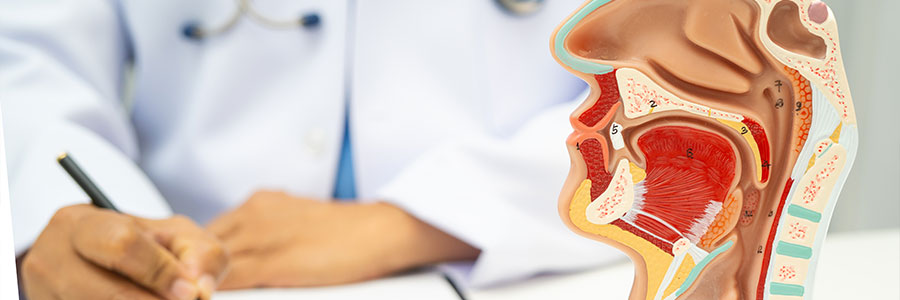
Nasopharyngeal cancer
It develops in the nasopharynx, which is the upper part of the throat located behind the nose. Epstein-Barr virus infection is associated with this cancer. However, other factors can also contribute.
Head and Neck Cancer Treatment: Surgery, Radiation, and Chemotherapy
The treatment for head and neck cancer may include surgery, radiation therapy, chemotherapy, targeted therapy, immunotherapy, reconstructive surgery, and rehabilitation. A Head and Neck Cancer Doctor in Siliguri may plan the treatment according to the cancer’s location, type, stage, and biological characteristics. They may also consider the patient’s health and the treatment preferences. These treatments are described below -
Surgery
it involves removing the cancerous tissue of the oral cavity, salivary glands, thyroid, and nearby lymph nodes if they are affected.
Radiation therapy
it is often used as the primary treatment for head and neck cancers after surgery to reduce the risk of recurrence, or it may be used alongside chemotherapy.
Chemotherapy
Chemotherapy uses medicines to destroy cancer cells or slow their growth.
Targeted therapy
it uses medicines that act on specific proteins or biological pathways involved in cancer growth.
Immunotherapy
it helps the immune system in recognising and responding to cancer cells. It may be considered for advanced, recurrent, or metastatic head and neck cancers.
Reconstructive surgery and rehabilitation
at times, reconstructive procedures are required after cancer surgery. Rehabilitation may include speech therapy, swallowing exercises, nutritional support, and guidance on managing changes in daily activities.
Follow-up and supportive care
regular follow-up appointments help the medical team monitor recovery, manage treatment side effects, and check for signs of recurrence.
What to Expect During Your Consultation with a Head & Neck Oncologist in Siliguri
A consultation with a Head and Neck Cancer Specialist in Siliguri is an opportunity to discuss at length the symptoms, understand diagnostic findings, and learn about suitable treatment options. Read on to find what can be expected during the consultation.
Discussion of symptoms and medical history
The patient may be asked about the symptoms, any previous illnesses, ongoing medications, tobacco use, alcohol consumption, and any test reports.
Medical check-ups
The patient’s mouth, throat, neck, and other relevant areas may be checked. Additionally, an examination by an ENT specialist or an endoscopic assessment may also be recommended.
Review of previous reports
In case the patient has already undergone tests, the doctor may review the biopsy reports, scans, blood tests, and treatment records.
Discussion of diagnosis and treatment options
If the cancer has been confirmed, the doctor will explain the type, stage, and extent of the disease on the basis of the reports and other examinations.
Planning the next steps
The doctor may recommend additional tests, refer the patient to other specialists, or prescribe a treatment schedule.
Why Choose Dr. Manish Goswami as your Head & Neck Oncologist in Siliguri?
Choosing the right Head & Neck Oncology Specialist in Siliguri is an important step in the diagnosis and treatment of head and neck cancer. For patients looking for excellent treatment, Dr. Manish Goswami's name consistently comes at the top of the list. Here are some of the reasons why patients choose Dr. Manish Goswami –
Specialised training
Dr. Manish Goswami has received expert training in head and neck surgical oncology. Thus, it equips him with the knowledge and skills to evaluate complex cancer cases, plan appropriate surgical procedures, and consider the reconstructive needs of the patient.
Wide spectrum of treatments
he provides treatment for various types of head and neck cancer. This includes oral cavity cancer, tongue cancer, jaw cancer, throat cancer, laryngeal cancer, and more. He thus provides a one-stop solution.
Experience in Reconstructive Surgery
Dr. Goswami has longstanding experience in microvascular reconstructive surgery, including free-flap procedures. This helps address tissue loss and support rehabilitation in patients.
Professional involvement in Oncology
Dr. Goswami is associated with professional organizations such as the Foundation for Head and Neck Oncology and more. Thus, he keeps himself updated about the latest treatments in head and neck cancers.
Frequently Asked Questions

Dr. Manish Goswami
Consultant - Head and Neck Surgical Oncologist in Siliguri

